

Why Global Brands Source TPU Film Directly from China Factories
Aug 17, 2026

One-Stop Shoe Material Factory In China
Send your inquiry about shoe materials to Solamni and experience the transformative power it can have on your business or brand. With our premium material solutions-from high-performance outsoles to breathable uppers-you can elevate your footwear collections, captivate your target audience, and unlock new opportunities for growth and success in the competitive footwear industry.

Solamni TPU film is a thermoplastic polyurethane elastomer film extruded to thicknesses of 0.05–1.50mm with Shore hardness ranging from 70A to 98A and melting points customizable between 80°C and 220°C. It exhibits tensile strength of 30–60 MPa per ASTM D412, elongation at break exceeding 400%, and hydrolysis resistance retaining ≥80% tensile strength after 5 weeks at 70°C / 95% RH (ISO 105-S03 equivalent). As a China TPU film factory operating 6 extrusion lines with IATF 16949 certification, Solamni supplies footwear, automotive interior, and furniture upholstery OEMs with MOQ from 500 meters and stock lead times of 3–5 working days.
Technical Specifications Matrix
| Parameter | Polyether-Based Grade | Polyester-Based Grade | Polycaprolactone-Based Grade | Test Standard |
|---|---|---|---|---|
| Shore Hardness | 70A / 80A / 85A / 90A / 95A | 80A / 85A / 90A / 95A / 98A | 85A / 90A / 95A | ASTM D2240 |
| Melting Point Range | 100–180°C | 120–220°C | 130–200°C | DSC (ISO 11357-3) |
| Tensile Strength at Break | 30–50 MPa | 40–60 MPa | 45–55 MPa | ASTM D412 Die C |
| Elongation Rate (%) | 450–650% | 400–550% | 400–500% | ASTM D412 Die C |
| Moisture Vapor Transmission Rate (MVTR) | 8,000–15,000 g/m²/24h | 2,000–6,000 g/m²/24h | 4,000–9,000 g/m²/24h | ASTM E96-BW |
| Hydrostatic Head Rating (Waterproofness) | ≥10,000 mm H₂O | ≥12,000 mm H₂O | ≥11,000 mm H₂O | ISO 811 |
| Thickness Range | 0.05–1.00 mm (±0.005mm ≤0.30mm) | 0.08–1.50 mm (±0.005mm ≤0.30mm) | 0.10–1.20 mm (±2% >0.30mm) | In-line beta-ray gauge |
| Processing Methods | High-frequency welding, heat-press lamination, solvent-free adhesive bonding | High-frequency welding, heat-press lamination, calender embossing | High-frequency welding, heat-press lamination, thermoforming | - |
| Hydrolysis Resistance (70°C / 95% RH, 5 weeks) | ≥90% tensile retention | ≥75% tensile retention | ≥85% tensile retention | ISO 105-S03 |
| REACH SVHC (233 substances) | Compliant | Compliant | Compliant | EU 1907/2006 |
| RoHS 2.0 | Compliant | Compliant | Compliant | EU 2011/65/EU |
Quality Control & Testing Standards
Every production batch undergoes a four-stage QC protocol before release.
Stage 1 - In-Line Process Control. Twin-screw co-rotating extruders (L/D 44:1) feed through gravimetric dosing systems with ±0.1% accuracy. In-line beta-ray thickness gauges sample at 250 Hz across the full 2,200mm web width, triggering automatic die-bolt adjustment within 1.2 seconds. Off-spec material is automatically diverted via edge-trim cutters, holding scrap rate below 1.8% of total output. Calendering machines apply textured finishes at roll surface temperatures of 160–190°C with pressure uniformity of ±3 bar, ensuring emboss depth consistency of 0.02–0.08mm across the roll face.
Stage 2 - Physical Destructive Testing. Each batch is sampled at the winder and tested on universal tensile testing machines per ASTM D412 Die C. Tear strength (Die C trouser), tear propagation (Graves), and compression set (ASTM D395 Method B, 22h at 70°C) are recorded. Electronic thickness measuring machines verify 10-point thickness profiles per linear meter, rejecting any reel exceeding the ±0.005mm tolerance for gauges ≤0.30mm.
Stage 3 - Environmental & Chemical Aging. Hydrolysis aging chambers expose specimens to 70°C / 95% RH for 5 weeks (ISO 105-S03 equivalent), with tensile strength retention measured at weeks 1, 3, and 5. Melt flow index is tested per ISO 1133 at 190°C / 2.16 kg to confirm batch-to-batch processing consistency. Corona-treated films are verified at ≥38 dyn/cm using a corona dynamometer to guarantee downstream lamination peel strength of ≥4.5 N/25mm (ASTM D903).
Stage 4 - Export Documentation & Traceability. Each shipment carries a batch-specific Certificate of Analysis (CoA), REACH SVHC 233-substance declaration, RoHS 2.0 test report, and material safety data sheet (SDS). For automotive Tier-1 customers, IATF 16949-certified lines issue Level 3 PPAP packages including IMDS submissions and process FMEA within 20 working days of sample approval. SGS SMETA 4-pillar factory audit reports are available on request.

Industrial Application Scenarios
Footwear Manufacturing. Polyether-based TPU film at 0.08–0.15mm serves as a hot-melt adhesive layer for toe-puff and counter reinforcement in sports shoe uppers, activating at 90–110°C with a 15–25 second open time. Thicker 0.20–0.40mm polyester-grade film is laminated to mesh or T/C backing for tongue lining substrates and footwear structural integrity components, withstanding 50,000 flex cycles at −20°C without cracking (SATRA TM60).
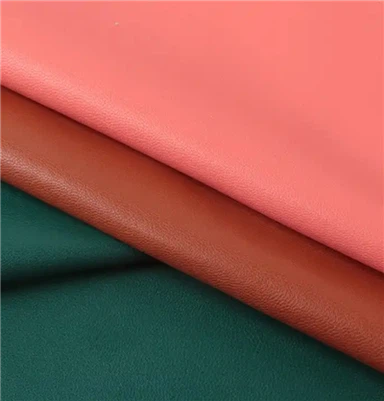
Furniture Uphstery & Commercial Contract. Polyester TPU film at 0.15–0.30mm with leather-grain or suede emboss is laminated to woven or non-woven backing for heavy-traffic commercial contract furniture and sofa upholstery. CAL 117 flammability-compliant grades pass the California Bureau of Electronic and Appliance Repair, Home Furnishings, and Thermal Insulation smolder test, with char length ≤180mm. Films with UV-stabilizer additive (0.3%) retain ≥80% gloss after 500 hours of accelerated weathering (ASTM G154 Cycle 1).
Automotive Interiors. Heat-stabilized TPU film (0.5–1.50mm, melting point 150–170°C) is used for automotive interior door panel substrates and automotive aftermarket seat cover waterproof lining. Low-gloss textured finishes (60° gloss ≤5 GU) match OEM interior specifications, and heat-stabilizer additive (0.5%) prevents surface deformation at continuous 110°C exposure (SAE J1960).
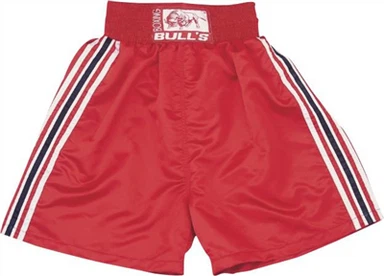
Sports & Industrial Equipment. High-hardness 95A–98A polyester TPU film at 0.30–0.80mm forms protective outer layers for boxing gear and bonding interlayers for football panel construction, with seam peel strength ≥60 N/25mm. Industrial conveyor belt surface layers use 180–200°C melting-point grades with anti-static additive (0.2%), achieving surface resistivity of 10⁹–10¹¹ Ω/sq per ASTM D257.
FAQ

Q1: How does Solamni optimize cutting yield for 0.08–0.15mm thin-gauge TPU film in footwear toe-puff die-cutting?
Q2:What lamination parameters prevent delamination when bonding 120–140°C melting-point polyester TPU film to T/C backing for furniture upholstery?
Q3: What is the sample lead time, and can Solamni allocate from 300+ stock patterns for urgent trial orders?
One-stop shoe material Factory in China
Require immediate engineering consultation or custom specification development for upcoming footwear material programs? Contact our technical sales engineering team directly at ace01@eurus-cn.com or call +86 13459576329 for 24/7 technical support, physical swatchbooks, and direct factory quotation matrices.