

Eyelet And Vamp Reinforcements: Preventing Lace Pull-Through Tears
Nov 11, 2026

One-Stop Shoe Material Factory In China
Send your inquiry about shoe materials to Solamni and experience the transformative power it can have on your business or brand. With our premium material solutions-from high-performance outsoles to breathable uppers-you can elevate your footwear collections, captivate your target audience, and unlock new opportunities for growth and success in the competitive footwear industry.

Meta Description
Learn how reinforcement films improve shoe eyelet strength, stitch-tear resistance, and vamp durability in performance footwear.
Eyelet and Vamp Reinforcements: Preventing Lace Pull-Through Tears
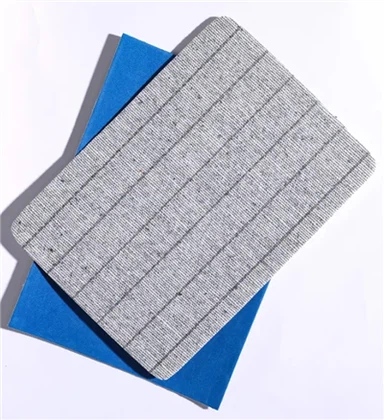
Shoe eyelet reinforcement film strengthens high-stress areas around lace holes and the vamp to help prevent tearing during repeated lacing and wear. For performance running shoes, thermoplastic reinforcement tapes can provide localized structural support without adding excessive bulk. Buyers should evaluate film thickness, tensile behaviour, stitch-tear resistance, bonding compatibility, and finished-upper performance before approving bulk production.
1. High Tensile Stress Points in Performance Running Shoes
Eyelets experience repeated tensile loading as users tighten and loosen laces. During running, foot movement and lace tension create additional stress around the eyelet holes, stitching lines, and adjacent upper panels.
The vamp also experiences repeated bending and deformation as the foot moves through the gait cycle.
Common upper failure locations
- Eyelet holes: Stress concentration around punched or cut openings.
- Stitching lines: Tear propagation caused by thread tension and repeated loading.
- Vamp panels: Repeated flexing and deformation during walking and running.
- Quarter panels: Localized tension transferred from the lacing system.
- Mesh-to-reinforcement interfaces: Delamination or tearing when bonding is insufficient.

2. High-Modulus Thermoplastic Tapes (0.3mm to 0.6mm)
Thermoplastic reinforcement tapes can be laminated between the outer upper material and lining to improve dimensional stability around eyelets and other high-load areas.
A thickness range of 0.3 mm to 0.6 mm can serve as an initial development window for certain footwear constructions, not a universal specification. The appropriate thickness depends on upper material, eyelet design, lacing force, shoe category, and assembly process.

|
Key material selection factors
High-modulus films can provide useful support, but modulus alone does not predict eyelet durability. Film geometry, punched-hole edges, adhesive compatibility, and stitch placement also affect failure performance. |
|||||||||||||||||||||
|
Design recommendations
|
3. Stitch-Tear Resistance Exceeding 120 N (SATRA TM180)

Recommended testing considerations
For reliable comparison, test the unreinforced upper and reinforced upper using consistent specimen preparation and conditioning. Finished-component testing is particularly important because film strength does not directly equal eyelet pull-through resistance. |
|---|
4. Invisible Internal Lamination Between Shell and Lining
Internal lamination places the reinforcement layer between the visible upper shell and the lining. This construction can strengthen high-stress areas while preserving the external appearance of the shoe.
It is useful for designs where visible overlays are undesirable or where the brand requires a clean upper surface.

Benefits of internal reinforcement
|
Lamination factors to control
A strong initial bond is not sufficient if the laminate separates after repeated bending. Buyers should evaluate both initial peel strength and conditioned performance. |
5. Roll Slitting Services for Eyelet Strips
For high-volume footwear production, reinforcement film supplied in accurately slit rolls can simplify material handling and improve cutting efficiency.
Instead of cutting reinforcement strips manually from wide rolls, manufacturers can specify slit widths that match their eyelet reinforcement patterns and production equipment.
Important roll-slitting specifications
| Specification | Information to confirm |
|---|---|
| Roll width | Original master-roll width and finished slit width |
| Thickness | Nominal thickness and tolerance |
| Core diameter | Compatibility with unwinding equipment |
| Roll length | Required length per roll |
| Edge quality | No unacceptable burrs, deformation, or uneven edges |
| Winding direction | Suitable for the buyer's feeding process |
| Packaging | Protection against dust, moisture, and deformation |
| Identification | Batch number and material specification |
For repeat orders, buyers should approve a reference sample and document slit-width tolerances, roll winding, packaging, and batch identification.
💡 Sourcing Tip for Bulk Buyers
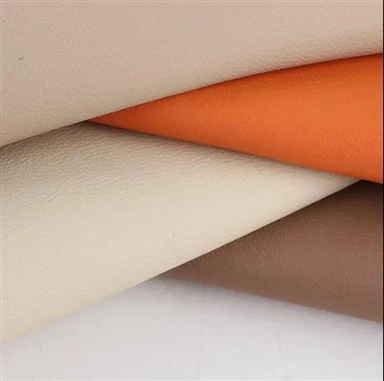
Explore Solamni's PU leather and reinforcement material options for footwear material development and sourcing discussions.
f a q

Q1: What is shoe eyelet reinforcement film?
A1:It is a reinforcing film or tape positioned around shoe eyelets and other high-stress upper areas. It helps distribute lace tension and reduce localized deformation or tearing.
Q2: What thickness is suitable for eyelet reinforcement?
A2:A range of 0.3 mm to 0.6 mm can be considered for initial trials in selected footwear designs. Final thickness depends on upper construction, required stiffness, bonding method, and finished-shoe testing.
Q3: Can internal reinforcement prevent lace pull-through tears?
One-stop shoe material Factory in China
Require immediate engineering consultation or custom specification development for upcoming footwear material programs? Contact our technical sales engineering team directly at ace01@eurus-cn.com or call +86 13459576329 for 24/7 technical support, physical swatchbooks, and direct factory quotation matrices.