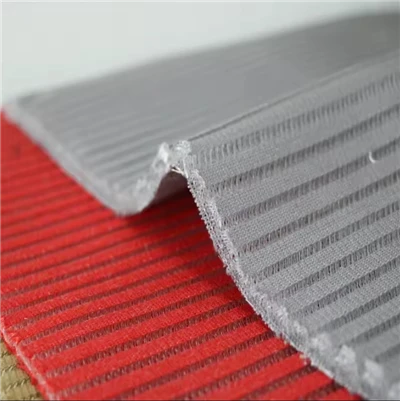


High-Frequency Embossing on Sneaker Uppers: Preserving 3D Definition
Nov 06, 2026

One-Stop Shoe Material Factory In China
Send your inquiry about shoe materials to Solamni and experience the transformative power it can have on your business or brand. With our premium material solutions-from high-performance outsoles to breathable uppers-you can elevate your footwear collections, captivate your target audience, and unlock new opportunities for growth and success in the competitive footwear industry.

Meta Description
Learn how PU leather formulation, brass tooling, heat control, and foil matching affect 3D high-frequency embossing on sneaker uppers.
High-Frequency Embossing on Sneaker Uppers: Preserving 3D Definition
High-frequency (HF) embossing uses an electromagnetic field to heat compatible materials internally or within the active bonding zone, allowing a patterned electrode to create raised or recessed details. On sneaker uppers, the process can produce logos, geometric ridges, decorative panels, and dimensional textures without relying entirely on conventional surface printing.
For footwear manufacturers, the challenge is not simply creating a sharp pattern at the embossing station. The embossed structure must retain its definition after cooling, cutting, stitching, lasting, and repeated flexing. Material dielectric response, coating construction, electrode design, process control, and the geometry of the shoe upper all influence the final result.
1. Dielectric Response of Polyurethane Under High Voltage
HF processing depends on the dielectric properties of the material placed in the electric field. Under an alternating high-frequency field, polar molecules respond to the changing electrical energy, generating heat within suitable materials.
PU synthetic leather can be considered for HF embossing, but not every PU construction responds in the same way. Resin chemistry, plasticizers, pigments, coating thickness, backing fabric, moisture content, and additives can affect dielectric heating and process stability.
Why PU formulation matters
The face coating and backing must be evaluated as a complete construction. A PU surface may soften under the selected HF conditions while the textile backing responds differently. This can lead to uneven definition, surface distortion, or inconsistent bonding.
Important material variables include:
- PU resin system: Different formulations have different dielectric and thermal responses.
- Coating thickness: Uneven coating thickness can contribute to inconsistent heating and pattern depth.
- Backing fabric: Polyester, nylon, and other textile structures may affect heat distribution and dimensional stability.
- Pigments and additives: Formulation components can influence dielectric behavior and finished color.
- Moisture content: Moisture variation may affect processing stability and should be controlled where relevant.
Establishing a suitable process window
HF embossing parameters must be developed for the exact material and tooling combination. Common variables include:

| rocess variable | Potential effect on embossing |
|---|---|
| Frequency | Influences dielectric heating behavior |
| Applied power or field intensity | Affects heating rate and energy input |
| Pressure | Influences contact and pattern transfer |
| Dwell time | Determines exposure duration |
| Cooling time | Affects dimensional stability and pattern retention |
| Electrode geometry | Determines the distribution and sharpness of the embossed pattern |
Excessive energy or dwell time may cause surface damage, excessive softening, distortion, or unwanted changes in gloss. Insufficient energy may produce shallow or incomplete definition.
A controlled trial should begin with the material supplier's and equipment manufacturer's guidance. Adjust one parameter at a time where practical, then document the resulting pattern depth, surface condition, and repeatability.

2. Precision Brass Tooling Design and Thermal Insulation
The electrode or embossing die transfers the designed geometry to the material. Tooling accuracy is therefore central to pattern consistency, particularly for fine geometric lines, small logos, and repeated decorative elements.
Brass is one possible tooling material for precision electrodes. Its suitability depends on the machine configuration, electrode design, production volume, and required pattern detail.
Brass electrode design considerations
A tooling drawing should define more than the overall logo or pattern. It should specify:
- Raised and recessed areas.
- Ridge width and height.
- Groove depth and spacing.
- Corner radii and transition geometry.
- Pattern alignment and repeat dimensions.
- Electrode surface finish.
- Registration features for positioning.
- Sharp corners may create stress concentrations or uneven material flow. In some designs, slightly radiused transitions produce more consistent results while retaining the intended visual definition.
Thermal insulation and heat management
Tooling temperature and heat transfer can influence embossing consistency. Insulation, backing plates, and machine interfaces should be designed according to the equipment manufacturer's recommendations.
The objective is to maintain stable processing conditions without creating localized overheating or uneven contact pressure. Insulation should not be treated as a substitute for correct electrode geometry, machine calibration, or process control.
Tooling validation
Before mass production, evaluate the die using the intended PU leather grade. Check the embossed depth, line continuity, edge sharpness, repeat alignment, and surface appearance.
A tooling sample should also be tested after the material has cooled and returned to normal handling conditions. An impressive pattern immediately after embossing may not retain the same definition after relaxation.
3. Retaining Sharp Geometric Ridges After Lasting Pull
A major production challenge is maintaining embossed detail during lasting. The upper is stretched and shaped around the last, so the embossed surface may experience tension, compression, and local deformation.
A pattern that looks sharp on a flat material sample may become distorted after the upper is assembled.
Why embossed ridges lose definition
Several factors can contribute to pattern loss:
- The PU coating is too soft or insufficiently stable for the lasting process.
- Embossed ridges are too shallow for the expected deformation.
- The pattern is positioned across a high-stretch area.
- Lasting tension is uneven or excessive.
- Heat exposure during subsequent processing changes the material's structure.
- The backing fabric stretches or shifts relative to the surface coating.
Designing for lasting deformation
Embossing geometry should be developed with the shoe's panel layout in mind. Fine, closely spaced ridges may be more vulnerable to deformation than broader patterns, depending on material thickness and flexibility.
For areas subject to high tension, consider:
- Reviewing the direction of upper stretch relative to the pattern.
- Avoiding critical decorative details across high-deformation zones where possible.
- Testing ridge geometry on the actual material thickness and backing.
- Evaluating the upper after cutting, stitching, and lasting.
- Checking whether the pattern remains visually consistent across left and right shoes.
Post-lasting inspection
A practical quality inspection should compare flat embossed samples with finished lasted uppers.

| Inspection point | What to check |
|---|---|
| Ridge height | Whether raised details retain their intended profile |
| Line definition | Whether geometric edges remain clear |
| Pattern alignment | Whether the design shifts during lasting |
| Surface condition | Cracking, whitening, gloss variation, or distortion |
| Pair consistency | Whether left and right uppers show similar appearance |
| Flex performance | Whether details remain intact after repeated movement |
The acceptance criteria should be agreed before production. For a private-label sneaker project, this may include approved visual samples, dimensional tolerances, and post-lasting inspection requirements.
- Reference color and approved master sample.
- Surface finish, such as matte, gloss, metallic, or pearlescent.
- Viewing conditions and light sources.
- Acceptable color difference.
- Compatibility with the intended substrate and bonding process.
- Resistance to rubbing, flexing, and handling.
- Foil transfer consistency.
- Adhesion to the PU surface.
- Surface blistering or wrinkling.
- Color shift after processing.
- Cracking or peeling during flexing.
- Abrasion and rubbing resistance.
5. Tooling Collaboration for Private Labels
Private-label footwear projects often require exclusive textures, logo placement, and repeatable visual details. Successful development depends on coordination between the brand, material supplier, tooling manufacturer, and shoe factory.
A clear technical brief reduces unnecessary tooling revisions and sample delays.
Information to provide during development
| Required information | Why it matters |
|---|---|
| Upper material specification | Establishes the PU construction to be embossed |
| Pattern artwork | Defines the intended visual design |
| Embossing dimensions | Controls ridge height, spacing, and pattern scale |
| Shoe panel drawing | Shows pattern location and stretch direction |
| Production equipment details | Helps assess machine and tooling compatibility |
| Color and finish reference | Supports surface and foil matching |
| Annual or trial volume | Helps determine tooling and production planning |
| Acceptance criteria | Defines the required result after lasting and flexing |
Recommended development workflow
- Design review: Confirm artwork, panel dimensions, pattern direction, and logo positioning.
- Material selection: Choose the PU leather construction and verify its suitability for the intended HF process.
- Tooling design: Develop the electrode based on the required geometry and equipment.
- Initial embossing trial: Evaluate pattern transfer, surface condition, and dimensional accuracy.
- Upper assembly trial: Cut, stitch, and last the embossed material.
- Performance evaluation: Check pattern retention, flexing, abrasion, and color consistency.
- Approval and production control: Record the approved material, tooling version, and process parameters.
💡 Sourcing Tip for Bulk Buyers
f a q

Q1: Can all PU synthetic leather be embossed using high-frequency equipment?
A1:No. HF compatibility depends on the PU formulation, coating, backing fabric, thickness, and dielectric response. Each construction should be tested with the intended machine and electrode.
Q2: Why does an embossed pattern become flat after shoe lasting?
A2:Lasting applies tension and deformation to the upper. If the embossed material or pattern geometry cannot withstand that deformation, ridges may become shallow, distorted, or uneven. Testing on a finished lasted upper is essential.
Q3: Is brass tooling suitable for detailed sneaker embossing?
One-stop shoe material Factory in China
Require immediate engineering consultation or custom specification development for upcoming footwear material programs? Contact our technical sales engineering team directly at ace01@eurus-cn.com or call +86 13459576329 for 24/7 technical support, physical swatchbooks, and direct factory quotation matrices.