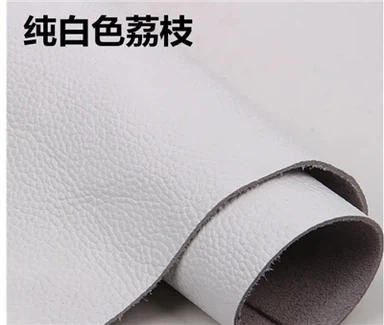


Why Microfiber PU Leather is Revolutionizing Modern Automotive Interiors
Jul 23, 2026

Solamni Microfiber PU leather is a high-density polyamide micro-matrix synthetic material engineered to deliver equivalent tactile softness to premium Nappa leather while reducing overall seat trimming weight by up to 30%. Operating under strict low-VOC emission parameters ($\le 2.5$ on the VDA 270 odor scale), this material provides Tier-1 automotive suppliers and OEM manufacturers with a structural solution that withstands over 100,000 Martindale abrasion cycles without surface cracking. By integrating solvent-free polyurethane top-coats with continuous non-woven backing, it eliminates grain inconsistencies and optimizes nesting yield on automated CNC cutting lines.
Engineering Performance Matrix: Microfiber PU vs. Nappa Leather
When evaluating interior trim specifications for high-volume automotive platforms-particularly Electric Vehicles (EVs) prioritizing cabin weight optimization-material selection dictates both manufacturing yield and long-term durability. The matrix below outlines the empirical physical and mechanical variances between automotive-grade Microfiber PU leather and traditional chrome-tanned Nappa leather.
| Physical & Mechanical Parameter | Automotive Microfiber PU Leather | Traditional Nappa Genuine Leather | Industry Testing Standard |
| Average Weight per $\text{m}^2$ | $450 - 550\text{ g/m}^2$ | $750 - 950\text{ g/m}^2$ | ISO 2286-2 |
| Thickness Tolerance | $1.2\text{mm} \pm0.03\text{mm}$ | $1.1\text{mm} - 1.4\text{mm}$ (varies by hide) | ISO 2589 |
| Martindale Abrasion Resistance | $> 100,000\text{ cycles}$ | $40,000 - 50,000\text{ cycles}$ | ISO 12947-2 |
| Tensile Strength (MD/CD) | $\ge 450\text{ N/5cm} / \ge 380\text{ N/5cm}$ | $\ge 250\text{ N/5cm} / \ge 200\text{ N/5cm}$ | ISO 1421 |
| Hydrolysis Resistance | 10-Year Jungle Test ($70^\circ\text{C}$, 95% RH) | 3-5 Years (degrades under moisture) | ISO 1419 Method C |
| VDA 270 Odor Rating | $\le 2.5$ (Low-VOC compliant) | $3.0 - 4.0$ (Amine/tanning odor) | VDA 270 |
| Flame Retardancy | Self-extinguishing ($< 100\text{ mm/min}$) | Requires heavy chemical retreatment | FMVSS 302 / ISO 3795 |
| Automated Cutting Yield | $> 95\%$ usable surface roll width | $60\% - 75\%$ due to natural hide defects | CNC Nesting Efficiency |
💡 Sourcing Tip for Bulk Buyers: Evaluating interior trim materials for high-volume EV platforms? Explore our complete range of Microfiber PU Leather formulations to obtain certified technical data sheets, ISO 17025 test reports, and free physical sample swatches directly from our engineering team.
Key Structural Advantages for Tier-1 Automotive Suppliers
1. EV Mass Reduction & Battery Range Efficiency
Unladen vehicle mass directly impacts kilowatt-hour efficiency per mile in Electric Vehicle (EV) platforms. Replacing traditional Nappa leather seating trims with high-density polyamide microfiber PU reduces overall cabin upholstery mass by approximately 30%. On a standard 5-passenger SUV platform, this substitution saves between 4.5 kg to 6.2 kg of interior weight, directly aiding compliance with strict vehicular curb-weight targets.
2. Elimination of Hidden Defects & Cutting Scrap Minimization
Natural hides suffer from unpredictable neck wrinkles, insect bite scarring, and density variations across different hide sections (butt vs. belly). These defects cap automated CNC nesting efficiency at 60%–75%, driving up material scrap costs. Solamni Microfiber PU leather is supplied in continuous 1.37m rolls with a strict total thickness tolerance of $\pm0.03\text{mm}$. This structural uniformity enables tightly packed nesting profiles, boosting material yield above 95% and eliminating feeding jams on high-speed cutting tables.
3. VOC Emission Control & VDA 270 Odor Mitigation
Modern automotive interiors must satisfy rigorous indoor air quality (IAQ) regulations regarding volatile organic compounds (VOCs) like formaldehyde, toluene, and xylene. Solvent-based synthetic leathers and traditional leather tanning processes off-gas heavy chemical vapors, causing windshield fogging and occupant discomfort. By employing water-based polyurethane resins and multi-stage thermal degassing tunnels, Solamni microfiber PU achieves a VDA 270 odor rating of $\le 2.5$, satisfying Tier-1 global OEM cabin standards.
4. Hydrolysis Resistance & Dynamic Flex Fatigue
Automotive seat cushions experience severe dynamic stress, localized body heat, and humidity accumulation. Standard leather finishes degrade over time, causing surface cracking and gloss alteration. Our matrix-fibril non-woven substrate subjected to the 10-year Jungle Test ($70^\circ\text{C}$, 95% relative humidity for 10 weeks) shows zero peel-off, delamination, or surface stiffness change. It maintains flexible elasticity at temperatures down to $-30^\circ\text{C}$.
To eliminate batch-to-batch variation for international container shipments, Solamni operates a fully equipped, SGS-verified testing facility. Every lot of automotive microfiber PU undergoes four critical destructive testing steps before dispatch:
- Spectrophotometric Color Matching: Utilizing X-Rite desktop spectrophotometers, every production lot is color-checked under standardized D65, A, and CWF light sources to ensure a Delta E ($\Delta E$) threshold of less than 0.5 against master OEM color swatches.
- SAE J2412 Accelerated Xenon-Arc Weathering: Samples are exposed to high-irradiance UV radiation and cyclic temperature spikes to guarantee colorfastness and prevent surface chalking or tackiness after prolonged solar exposure.
- Seam-Tear & Stitch-Pull Resistance: Under ISO 13936-2 testing, the material must withstand a minimum needle-hole tear force of $\ge 120\text{ N}$ to prevent seam slippage along high-tension seat bolster seams during airbag deployment.
- Bally Flexometer Dynamic Cracking Test: Specimen swatches undergo 100,000 dry flex cycles at $23^\circ\text{C}$ and 30,000 wet flex cycles at $-20^\circ\text{C}$ without exhibiting micro-cracks along fold lines.
🛠️ Factory Assistance for OEM Procurement Teams: Need to match a specific Nappa surface grain, customized perforation pattern, or target flame-retardancy standard for your next vehicle trim program? Our international engineering team provides fluent English support, customized lab-dip color matching, and full SGS audit documentation within 5–7 working days. Contact Our Procurement Specialists Today to request your complimentary swatchbook.

FAQ

Q1: What is Solamni's Minimum Order Quantity (MOQ) and production turnaround for custom automotive microfiber PU?
Q2: How does Solamni assist international buyers with SGS factory audits and quality documentation?
Q3: Can Solamni supply pre-perforated microfiber leather rolls for ventilated automotive seating systems?

One-stop shoe material Factory in China
Require immediate engineering consultation or custom specification development for upcoming footwear material programs? Contact our technical sales engineering team directly at ace01@eurus-cn.com or call +86 13459576329 for 24/7 technical support, physical swatchbooks, and direct factory quotation matrices.