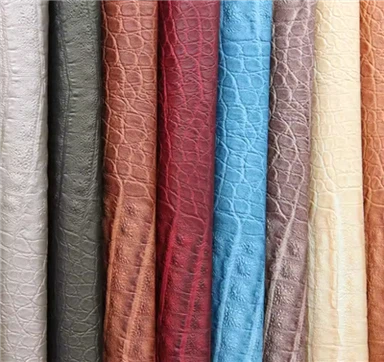


High-Frequency Welding Compatibility Tuning for Synthetic Leather Assemblies
Oct 14, 2026

One-Stop Shoe Material Factory In China
Send your inquiry about shoe materials to Solamni and experience the transformative power it can have on your business or brand. With our premium material solutions-from high-performance outsoles to breathable uppers-you can elevate your footwear collections, captivate your target audience, and unlock new opportunities for growth and success in the competitive footwear industry.

Meta Description
High-frequency (HF) welding, also called radio-frequency (RF) welding, uses an alternating electromagnetic field to generate heat within compatible thermoplastic materials. For synthetic leather assemblies, weld quality depends on polymer composition, material thickness, electrode design, applied pressure, and process settings. Not every PU leather grade is suitable for RF welding, so compatibility should be confirmed through sample trials before production.
Polymer Requirements for Dielectric Heating
RF welding works by heating suitable materials through dielectric losses under a high-frequency electric field. The material must respond sufficiently to the field to reach a weldable condition without unacceptable surface or structural damage.
Material selection is therefore the first control point.
PVC synthetic leather: Many PVC formulations are suitable for RF welding, although plasticizers, fillers, coatings, and backing materials affect the result.
TPU film: Certain TPU grades can be RF-welded, but performance depends on polymer formulation, thickness, and welding equipment.
PU synthetic leather: Conventional PU leather is not automatically RF-weldable. Some constructions contain PU surface layers over PVC, textile, foam, or other substrates, and the complete laminate must be evaluated.
Multilayer assemblies: Different layers may heat, soften, or degrade at different rates, limiting the usable process window.

Before ordering material, request confirmation of the intended welding method and test the actual production construction-not just a standalone resin or surface coating.

Preventing Surface Burning and Edge Arcing
Surface burning, weak seams, and electrical arcing usually indicate that the material, electrode setup, or process parameters are not adequately controlled.
| Observed defect | Possible cause | Recommended check |
|---|---|---|
| Burned or discolored surface | Excessive energy input or prolonged heating | Reduce the welding cycle or power within validated limits |
| Arcing near electrode edges | Uneven electrode contact, sharp geometry, contamination, or unsuitable clearances | Inspect electrode condition, alignment, and cleanliness |
| Incomplete weld | Insufficient heating, pressure, or contact | Verify material compatibility, electrode pressure, and cycle settings |
| Excessive material squeeze-out | Excessive pressure or heat for the construction | Adjust pressure and energy through controlled trials |
| Weak or inconsistent seams | Variable material thickness, electrode wear, or inconsistent positioning | Check incoming material and fixture repeatability |
A reliable tuning procedure changes one parameter at a time. Record welding power or energy, cycle time, pressure, electrode geometry, cooling or holding time, and the resulting seam performance.
Do not solve every weak weld by increasing power. Excess energy can damage the surface, distort embossing, weaken adjacent layers, or increase arcing risk. Follow the equipment manufacturer's operating and electrical safety requirements
Applications: Inflatable Gear, Footballs, and Embossed Logos
RF welding is used in products that require joined thermoplastic surfaces or repeatable sealed seams. Suitability depends on the material construction and performance requirements of the finished product.

| Application | Key requirements | Validation priorities |
|---|---|---|
| Inflatable products | Airtight seams and consistent joint geometry | Leak testing, seam strength, and pressure retention |
| Footballs and sports equipment | Repeatable panel joining and dimensional stability | Seam consistency, impact durability, and shape retention |
| Embossed logos and decorative details | Clean definition with limited surface damage | Pattern clarity, edge definition, and adhesion or joint strength |
| Synthetic leather components | Compatibility between surface layers, backing, and joining process | Weld integrity, appearance, flexibility, and aging performance |
For inflatable products, a visually clean seam is not sufficient evidence of airtightness. Establish leak-test criteria and test samples after the relevant conditioning or aging process.
For embossed logos, distinguish between RF welding, heat embossing, and other decorative processes. The appropriate method depends on whether the goal is to join layers, form a raised or recessed pattern, or attach a separate component.
Before scaling up, manufacturers should qualify both the material and the welding process. A short trial using the actual machine, electrode, and production stack-up can identify incompatibilities before they affect a full production run.
A useful qualification plan includes:
- Material identification: Record polymer type, layer construction, thickness, and surface finish.
- Weldability screening: Confirm whether the grade is designed for RF welding.
- Parameter trials: Evaluate power or energy, cycle time, pressure, and holding conditions.
- Performance testing: Assess seam strength, flexibility, appearance, and leakage where applicable.
- Process repeatability: Test multiple samples and confirm results across production-relevant material lots.

💡 Sourcing Tip for Bulk Buyers
When requesting RF-weldable synthetic leather, specify the intended application, layer construction, thickness, seam geometry, and required performance tests. Ask for samples of the exact grade proposed for production and verify compatibility with your own welding equipment.
Explore Solamni New Material's PU leather products and TPU film options. For inspection and material verification, review the quality control information. Confirm the RF-weldability of any specific grade before production approval.
f a q

Q1: Can all synthetic PU leather be high-frequency welded?
A1:No. PU leather may contain different surface coatings, backings, and laminate layers. RF weldability depends on the complete construction, so the actual grade must be tested.
Q2: Why does arcing occur during RF welding?
A2: Possible causes include electrode contamination, uneven contact, unsuitable electrode geometry or clearances, and inappropriate process settings. Inspect the tooling and follow the machine manufacturer's safety procedures before resuming production.
Q3:How should buyers verify RF-weldable material?
One-stop shoe material Factory in China
Require immediate engineering consultation or custom specification development for upcoming footwear material programs? Contact our technical sales engineering team directly at ace01@eurus-cn.com or call +86 13459576329 for 24/7 technical support, physical swatchbooks, and direct factory quotation matrices.