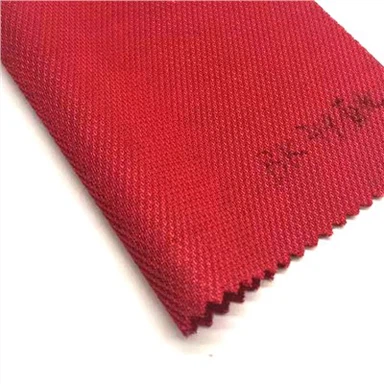


Identification of artificial leather
Mar 06, 2023
With the development of social science and technology, the artificial leather technology has become increasingly mature, and the product quality has been greatly improved. Especially in the imitation leather, it can be replaced by fake leather. It is similar to natural leather in many aspects such as permeability, flexibility, feel and appearance, but the price is far lower than natural leather. Therefore, in order to improve our identification ability, some simple and direct methods are introduced for reference.
Visual discrimination
First of all, it should be distinguished from the patterns, pores and other aspects of leather. The real leather has clear pores and patterns on the surface, the cattle skin has symmetrical fine pores, the yak skin has thick and sparse pores, and the goat skin has fish-like pores. Pigskin pores are round and thick, arranged in a triangular shape. The patterns and pores distributed on the surface of these natural leathers do exist and are unevenly distributed. There are animal fibers on the reverse side, side sections, and layers are clearly distinguishable. There are animal fibers on the lower layer. The leather fibers will stand up and feel fluffy when scraping with fingernails, and a small amount of fibers can also fall down. The fabric can be seen on the reverse side of the artificial leather, and there are no animal fibers on the side. Generally, there are no pores on the skin, but some have imitation leather artificial pores, There will be inconspicuous pores, some patterns are also inconspicuous, or there are regular artificial patterns, and the pores are also quite consistent.
Handfeel identification
Touch the leather surface with your hand, and it feels smooth, soft, plump and elastic; Generally, the artificial leather surface is astringent, rigid and soft. When the front of the leather is bent down for about 90 degrees, natural wrinkles will appear. The thickness and size of the wrinkles produced by bending different parts are obviously uneven. It can be basically recognized that this is the leather, because the leather has natural uneven fiber structure, so the performance of the wrinkles formed is also obviously uneven. However, artificial leather feels like plastic and has poor resilience. The thickness of the crease is similar after bending.
Odor identification method
Genuine leather has a strong taste of fur, which is obvious even after treatment, while artificial leather products have a taste of plastic without fur.
Combustion identification method
Distinguish it by smelling the smell of burning and looking at the state of ashes. When the leather burns, it will emit a smell of burning hair. The burnt ashes are generally fragile into powder, while the artificial leather will also have a strong flame after burning, shrink quickly, and have a very unpleasant plastic smell. It will become sticky after burning, and will harden into lumps after cooling.
It can even reach the level of "chaos". This requires careful identification and selection. Generally speaking, imitation leather is made by applying chemical raw materials on cloth. The appearance and feel of imitation cowhide are similar to cowhide; The appearance and feel of imitation sheepskin are similar to sheepskin, and its surface is glossy. However, when you look at the leather surface carefully, there are no pores, and the bottom plate is not animal skin. If you press hard, the leather surface will not wrinkle, and it can be distinguished from animal skin. However, there are also micro-porous film-filled artificial leather. In this case, it can still be judged according to its reverse base material.