


Evaluating Breathability in Multi-Layer Shoe Upper Laminates
Nov 16, 2026

One-Stop Shoe Material Factory In China
Send your inquiry about shoe materials to Solamni and experience the transformative power it can have on your business or brand. With our premium material solutions-from high-performance outsoles to breathable uppers-you can elevate your footwear collections, captivate your target audience, and unlock new opportunities for growth and success in the competitive footwear industry.

Meta Description
Learn how to improve shoe upper breathability through MVTR testing, dot and web adhesive coating, and controlled textile lamination.
Evaluating Breathability in Multi-Layer Shoe Upper Laminates
Breathable shoe upper lamination requires more than selecting an air-permeable outer fabric. Adhesive coverage, membrane structure, lining materials, and lamination conditions all affect moisture transfer through the finished composite. Footwear manufacturers should evaluate moisture vapor transmission, adhesive distribution, and in-shoe comfort together before approving laminated materials for bulk production.
1. Moisture Vapor Permeability (MVTR) in Bonded Uppers
Moisture vapor transmission rate (MVTR) measures how much water vapor passes through a material over a defined area and period. It is commonly expressed in g/m²/24 h.
In multi-layer shoe uppers, MVTR depends on the combined construction rather than the outer fabric alone.

Factors affecting MVTR include |
||||
|
| Layer | Main function | Breathability consideration |
|---|---|---|
| Outer mesh or textile | Structural support and surface protection | Open structure can support airflow |
| TPU film or membrane | Barrier and functional protection | Grade and structure affect vapor transmission |
| Adhesive layer | Bonds textile components | Coverage can restrict vapor pathways |
| Inner lining | Provides skin-contact comfort | Moisture management affects perceived comfort |
MVTR results depend heavily on the test method, temperature, humidity, and specimen preparation. Buyers should compare materials tested under the same conditions and request data for the complete laminate.
2. Web vs. Dot Gravure Adhesive Coating Configurations
Adhesive application is a major design variable in breathable shoe upper lamination. A continuous adhesive layer may create a strong bond but can reduce the effective area available for moisture transfer. Patterned application can preserve more open pathways.
Two common approaches are web adhesive and dot gravure coating

| onfiguration | Bonding characteristics | Potential breathability effect |
|---|---|---|
| Web adhesive | Discontinuous adhesive web structure | Can preserve open areas between adhesive strands |
| Dot gravure | Repeated adhesive dots applied in a controlled pattern | Leaves uncoated areas for vapor transfer |
| Full-surface coating | Continuous adhesive coverage | May restrict vapor transmission depending on adhesive and thickness |
| Web adhesive considerations |
|
Web adhesive forms a network of bonding strands between textile layers. It can provide distributed bonding while maintaining unbonded spaces. Strand density, adhesive weight, and web structure influence the final hand feel and bond strength. |
| Dot gravure considerations |
|
Dot gravure applies adhesive in a repeated dot pattern. Dot size, spacing, coating weight, and distribution determine the balance between adhesion and open area. For either configuration, more open space does not automatically mean better performance. Insufficient bonding can lead to delamination, especially around flexing zones and high-stress upper panels |
3. In-Shoe Microclimate: Evacuating Sweat and Heat
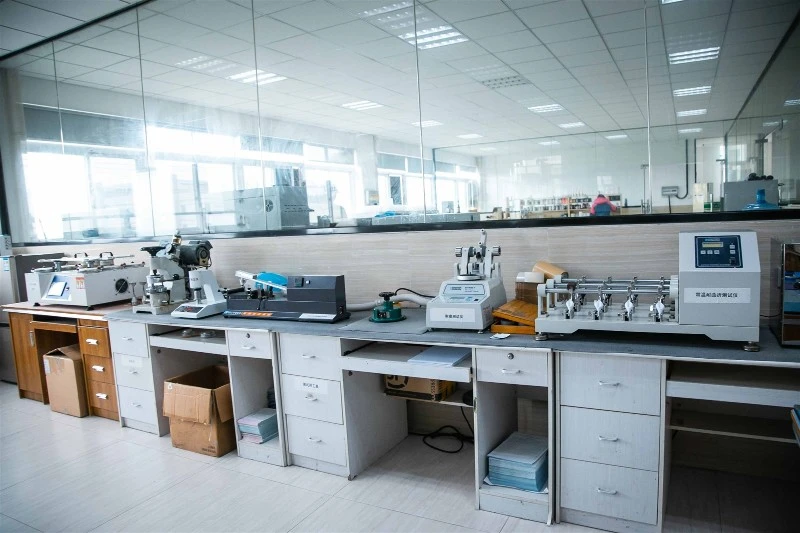
A breathable upper should support several functions
- Moisture vapor transfer: Allows water vapor to move through the upper construction.
- Air exchange: Supports ventilation where the construction permits airflow.
- Moisture management: Helps distribute or transport sweat through the lining system.
- Thermal comfort: Reduces excessive heat accumulation during activity.
- Structural durability: Maintains bonding and flexibility after repeated wear.
A high MVTR value does not necessarily mean high air permeability. These are different properties and should be evaluated separately.
For athletic footwear, compare the complete upper assembly under relevant test conditions. A useful development programme can include MVTR, air permeability, moisture management, flex resistance, and wearer trials.
4. Preventing Adhesive Bleed-Through to Outer Fabrics
Adhesive bleed-through occurs when adhesive penetrates or migrates through a textile layer and becomes visible on the outer surface. It can create shiny spots, stiff areas, discoloration, or uneven surface texture.
This problem is particularly relevant when laminating lightweight mesh, knitted fabrics, and open-structure textiles.
Common causes and controls
| Potential cause | Possible result | Process control |
|---|---|---|
| Excessive adhesive application | Visible adhesive marks | Optimize coating weight |
| Excessive nip pressure | Adhesive penetration | Adjust pressure and roller gap |
| Low-viscosity adhesive | Deeper penetration into textile | Confirm adhesive rheology |
| Excessive temperature | Changes in adhesive flow | Establish a suitable thermal window |
| Open textile construction | Increased penetration risk | Match adhesive pattern to fabric structure |
Recommended production checks
- Confirm the adhesive's viscosity and application suitability.
- Match coating weight to the textile's thickness and openness.
- Adjust nip pressure to avoid excessive compression.
- Establish temperature and line speed through controlled trials.
- Inspect the outer face for strike-through, gloss changes, and local stiffness.
- Check peel strength and flex durability after lamination.
Adhesive penetration should be assessed on the actual textile construction. A setting that works for dense woven fabric may not be suitable for lightweight engineered mesh.
5. Laminating Machine Parameter Dossier
Stable lamination requires documented process parameters. Temperature, pressure, line speed, adhesive quantity, and curing conditions interact, so there is no single universal setting for every shoe upper laminate.
A process dossier helps manufacturers reproduce approved sample performance during mass production.
| Parameter | What to document | Quality impact |
|---|---|---|
| Heating temperature | Actual operating temperature and tolerance | Adhesive activation and substrate stability |
| Nip pressure | Pressure or roller-gap setting | Bond strength and adhesive penetration |
| Line speed | Production speed | Heat exposure and bonding consistency |
| Adhesive coating weight | Applied adhesive quantity | Bonding and breathability balance |
| Adhesive pattern | Web, dot, or continuous coverage | Open area and bond distribution |
| Cooling conditions | Cooling method and process conditions | Composite stability |
| Curing time | Required time before final evaluation | Final bond development |
| Inspection frequency | Sampling points and intervals | Process consistency |
Recommended validation sequence
- Test the selected textile, film, and adhesive combination.
- Establish initial lamination settings through sample trials.
- Inspect appearance, softness, and adhesive penetration.
- Measure peel strength and MVTR on the finished laminate.
- Conduct flex and environmental conditioning tests.
- Record the approved settings as the production reference.
For repeat orders, changes in fabric GSM, adhesive formulation, film thickness, or machine configuration should trigger a review of the validated process.
💡 Sourcing Tip for Bulk Buyers
f a q

Q1: What is MVTR in shoe upper materials?
A1:MVTR is the moisture vapor transmission rate. It measures the amount of water vapor passing through a material over a defined area and time under specified test conditions.
Q2: Is dot gravure adhesive better than full-surface coating for breathable shoe uppers?
A2:Dot gravure can preserve uncoated pathways for moisture transfer. However, the best configuration depends on adhesive chemistry, textile structure, required peel strength, and finished-laminate testing.
Q3: How can manufacturers prevent adhesive bleed-through during lamination?
One-stop shoe material Factory in China
Require immediate engineering consultation or custom specification development for upcoming footwear material programs? Contact our technical sales engineering team directly at ace01@eurus-cn.com or call +86 13459576329 for 24/7 technical support, physical swatchbooks, and direct factory quotation matrices.


