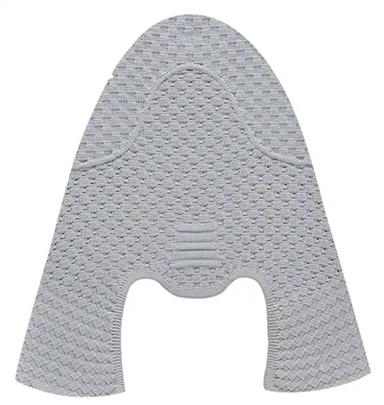


High Quality TPR Shoes Sole
Material:TPR
Size:31-45
Color:Various colors can be customized
MOQ:2000Pairs
Term of Payment:By T/T, 30% deposit and 70% balance payment before delivery
- Fast Delievery
- Quality Assurance
- 24/7 Customer Service
Product Introduction

One-stop shoe material Factory in China
We supply premium shoe materials and industrial raw materials. As a trusted shoe material supplier, we provide bespoke customization, competitive pricing and efficient fast delivery.

Meta Description
TPR shoe soles are injection-molded thermoplastic rubber (SBS/SEBS-based) sole units engineered for casual footwear, sandals, slippers, and dress shoes, combining elastic recovery, wet-surface slip resistance, and low material cost with easy colorability and recyclability. Solamni manufactures TPR shoe soles in Shore A 55–75 hardness with wet slip resistance coefficient above 0.45 and DIN abrasion below 200 mm³, produced on horizontal and vertical injection molding lines with in-house tooling. The facility supports custom hardness, color matching, tread pattern design, and sole unit assembly with EVA or PU midsoles, with batch production from 2,000 pairs and REACH/RoHS compliance for global footwear brands.
Technical Specifications Matrix
| Parameter | Specification |
|---|---|
| Material | Thermoplastic Rubber (TPR), SBS / SEBS-based; optional oil-extended grade for softness |
| Shore Hardness | 55A – 75A (±3) |
| Density | 0.90 – 1.10 g/cm³ (grade-dependent) |
| Tensile Strength at Break | ≥ 8 MPa |
| Elongation at Break | ≥ 350% |
| Abrasion Resistance (DIN 53516) | ≤ 200 mm³ |
| Slip Resistance (wet) | Coefficient of friction ≥ 0.45 (SATRA TM144, wet ceramic tile) |
| Compression Set | ≤ 35% (25% compression, 70°C, 22 h, ASTM D395) |
| Flex Resistance | ≥ 100,000 cycles at 22.5°, no cracking (SATRA TM161) |
| Heat Resistance | No permanent deformation at 65°C continuous; softening point ≥ 80°C |
| Cold Flex Temperature | −10°C – −20°C (grade-dependent, no cracking after mandrel bend) |
| Weight per Pair (EU 42) | 250 g – 500 g (sole unit, geometry-dependent) |
| Color | Custom Pantone matching; transparent, glow-in-the-dark, and glitter options available |
| Surface Finish | Matte / textured / high-gloss / custom logo emboss / dual-color injection |
| Environmental Compliance | REACH SVHC, RoHS 2.0; fully recyclable (thermoplastic) |
Quality Control & Testing Standards
Solamni's TPR shoe sole QC protocol covers compound consistency, injection process stability, slip and abrasion performance, heat-deformation resistance, and color uniformity - the critical quality dimensions for TPR footwear soles.
Compounding and injection process control.
TPR compound (SBS or SEBS polymer, processing oil, calcium carbonate filler, stabilizer, and pigment) is compounded in a twin-screw extruder at 140–180°C with zone temperature controlled within ±3°C, then pelletized. Each compound lot is verified by melt flow index (190°C / 5 kg, ASTM D1238) and Shore A hardness before release to production. Before injection molding, TPR pellets are dried at 60–80°C for 2 hours to remove surface moisture (preventing splay and voids). Barrel temperature is profiled across 4–5 zones (feed 150°C → nozzle 190°C) within ±3°C, and mold temperature is held at 30–50°C by a chiller. Injection speed, holding pressure (60–90 MPa), and cooling time are locked per cavity and logged. Shot weight is auto-weighed to ±0.5 g per cavity.
Physical destructive testing (per batch, AQL 2.5).
- Hardness - Shore A durometer, 5 readings per sole, ASTM D2240.
- Density - water displacement, ASTM D792, 3 specimens per batch.
- Tensile strength and elongation - universal testing machine, dumbbell specimen, 500 mm/min, ASTM D412.
- DIN abrasion - 40 m travel, 10 N load, DIN 53516.
- Slip resistance - SATRA friction tester, wet ceramic tile, SATRA TM144, 5 specimens per batch.
- Compression set - 25% compression, 70°C, 22 h, ASTM D395.
- Flex resistance - Ross flex tester, 100,000 cycles at 22.5°, SATRA TM161, inspection for cracking at flex groove roots.
- Heat deformation - sole placed in oven at 65°C for 4 hours under 0.05 MPa load, dimensional change ≤ 3%.
- Cold flex - specimen conditioned at specified low temperature for 4 hours, bent over 25 mm mandrel, no cracking.
- Color consistency - spectrophotometer ΔE ≤ 1.5 against approved master, measured on 5 soles per batch across cavities.
- Weight - electronic scale, per-cavity sorting, cavity-to-cavity variation ≤ 4%.
- Dimensional accuracy - CMM or 2D projector, tread lug height ±0.3 mm, sole curvature ±0.5 mm vs. CAD.
Chemical and regulatory testing.
Each TPR compound lot is verified by FTIR for polymer type (SBS vs. SEBS) and oil content. Finished soles are screened by GC-MS for REACH SVHC (including phthalates and PAHs) and ICP-OES for RoHS restricted elements. Total lead and cadmium content is tested below 100 ppm and 100 ppm respectively for footwear applications. Third-party SGS or Intertek reports are issued on request.
Equipment backing production stability.
The plant operates 8 horizontal injection molding machines (150T–350T) and 6 vertical injection machines (200T–400T) for TPR sole production, 4 twin-screw compounding lines, 6 desiccant dryers, 2 CNC mold centers, a CMM inspection station, a SATRA slip resistance tester, a Ross flex tester, a heat-deformation oven, and an automated sole-weight sorter. This setup supports batch-to-batch hardness variation below 2 Shore A points and color consistency (ΔE ≤ 1.5) across high-volume production runs.

Industrial Application Scenarios
Casual shoes and sneakers.
TPR soles in Shore A 60–70 with multi-directional tread patterns are standard for casual shoes, canvas sneakers, and lifestyle footwear. TPR's wet slip resistance (CoF ≥ 0.45) provides reliable traction on wet pavement and indoor floors, and the material's low cost supports high-volume casual footwear programs. Custom colors and dual-color injection enable fashion-season product updates.
Sandals and flip-flops.
Soft TPR (Shore A 55–65) with textured footbed patterns is used for sandal and flip-flop soles, where flexibility, comfort, and water resistance are prioritized. TPR does not absorb water and dries quickly, making it suitable for beach and poolside footwear. Transparent and glitter TPR options support fashion sandal designs.
Slippers and house shoes.
Soft, lightweight TPR (Shore A 55–60, density 0.90–0.95 g/cm³) is used for indoor slipper and house shoe soles, providing quiet walking, floor protection (non-marking), and slip resistance on tile and wood floors. The low heat-deformation temperature is acceptable for indoor use.
Dress shoes and formal footwear.
Harder TPR (Shore A 65–75) with leather-look texture and matte or semi-gloss finish is used as a cost-effective sole for dress shoes, Oxfords, and formal footwear. TPR soles can be buffed and edge-painted to resemble leather soles, and they offer better slip resistance than genuine leather on wet surfaces.
Children's footwear.
TPR is widely used for children's shoe soles due to its lightweight construction, easy colorability (bright colors, glow-in-the-dark, character designs), and low cost. Shore A 55–65 soft grades provide flexibility for growing feet, and the material is fully recyclable.
Work and safety footwear (entry-level).
TPR soles in Shore A 70–75 with slip-resistant tread patterns are used for entry-level work shoes and safety footwear where cost is a primary factor. TPR meets basic slip resistance requirements (CoF ≥ 0.45) but is not recommended for high-heat or high-abrasion work environments (see FAQ for heat resistance limitations).
Aftermarket and replacement soles.
Standard TPR sole units compatible with common shoe last geometries are supplied to shoe repair workshops, cobblers, and aftermarket retailers. TPR's ease of bonding (via PU or contact adhesive) and low cost make it a popular replacement sole material.
Frequently Asked Questions (FAQ)

Q: How do TPR soles compare to TPU and vulcanized rubber soles in durability, cost, and slip resistance?
Q: What are the heat resistance limitations of TPR soles, and how does this affect use in hot environments or car interiors?
A:Standard SBS-based TPR soles begin to soften at approximately 70–80°C and can experience permanent deformation (sole flattening, tread distortion) when exposed to temperatures above 65°C under load. This means TPR soles should not be left on a car dashboard or in a closed vehicle cabin in direct sunlight, where interior temperatures can reach 70–90°C. SEBS-based TPR grades offer improved heat resistance (softening point ≥ 90°C, no deformation at 75°C) and are recommended for footwear sold in tropical climates or for applications where heat exposure is likely. For footwear requiring continuous heat resistance above 70°C (e.g., industrial work boots, kitchen shoes), TPU or vulcanized rubber soles should be specified instead. We provide a heat-deformation test report (65°C / 4 h / 0.05 MPa, deformation ≤ 3%) with every standard TPR sole shipment, and SEBS-grade test reports on request.
Q: What custom color, transparent, and special-effect TPR options are available, and what is the minimum order?
A:TPR is one of the easiest sole materials to color. Standard custom Pantone colors are available with a 2,000 pair MOQ per colorway and 5–7 day color-chip approval before mass production. Color consistency is controlled to ΔE ≤ 1.5 across production runs. Transparent TPR (clear or tinted) requires a higher-purity SEBS-based compound with minimal filler, has a 3,000 pair MOQ, and may have slightly lower abrasion resistance (DIN ≤ 250 mm³) due to reduced filler content. Glitter, metallic, and glow-in-the-dark effects are achieved by adding masterbatch pellets during injection molding, with a 3,000 pair MOQ and 10–12 day lead time for effect sample approval. Dual-color injection (two colors in one sole) requires a two-shot rotary mold (tooling cost USD 4,000–7,000) and a 3,000 pair minimum per colorway. For color matching, effect selection, and sample evaluation, contact our English-speaking technical engineer Jason Lee directly.
Shows Products


Why Choose Us

why choose our products
We specialize in providing material high-quality for industrial applications. Our focus on B2B sourcing ensures that you get the best prices for large orders, with the flexibility to customize the fabric to meet your specific needs. Whether you require bulk quantities for production or specialized orders, we can help you achieve your goals with fast delivery and exceptional customer support.
Bulk Sourcing: Competitive pricing for large-scale orders.
Customization: Flexible solutions tailored to your industry needs.
Global Shipping: Fast, reliable delivery to international markets.
High-Quality Standards: Rigorous testing and quality assurance to ensure performance and durability.
Our Advantage

1
Pick and choose high quality raw materials.

2
Employ experienced workers, use professional machines

3
Make casual inspection regularly during the process of production.

4
we have a QC team to control the making process for every order. And also makes double checks to an AQL of clients choosing before packaging.

5
Keep on a strict quality standard.
F A Q
A:About 25-35 days after confirm the details .
A:30% in advance, 70% in the period of shipment, or 50% in advance, 50% in the period of shipment. Depends on order quantity.
A:We accept T/T, Paypal,West union ,FOB and so on.
30% deposit in advance and balance before shipment.
A: 3-5 days after confirming all details, and samples for free.
Solamni Import And Export Co., Ltd.
We sincerely welcome friends from all over the world to cooperate with us on the basis of long-term mutual benefits. We are looking forward to receiving your enquiries soon.
Email:ace01@eurus-cn.com Phone+8613459576329
Whatsapp+8613459576329
Hot Tags: high quality tpr shoes sole, China high quality tpr shoes sole manufacturers, suppliers, factory
No Information
No Information